Jackalope
Mythical North American jackrabbit with antelope horns.
The jackalope is a creature from North American folklore, imagined as a jackrabbit with antelope horns. Its name combines "jackrabbit" and "antelope." In the 1930s, two brothers from Wyoming, Douglas Herrick and his sibling, who learned taxidermy through mail-order courses, helped spread the jackalope’s fame. They attached deer antlers to a jackrabbit carcass and sold it to a hotel in Douglas, Wyoming. After that, they produced and sold many more to a store in South Dakota, and other taxidermists have continued making these horned rabbits into the 2000s. Stuffed jackalopes now appear in bars and businesses across the United States. Tourist shops sell postcards and other items featuring the creature, and companies in America and elsewhere have used the word "jackalope" or its image in marketing. The jackalope has shown up in stories, poems, TV shows, video games, and a low-budget mockumentary film. The Wyoming Legislature has considered making it the state’s official mythological creature.
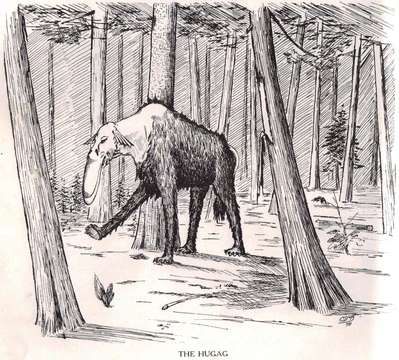
The legend that inspired the Herricks may connect to older tales from other cultures and times. Researchers think some stories of horned hares came from rabbits infected with the Shope papilloma virus, which causes horn-like tumors on the head and body. Folklorists group the jackalope with "fearsome critters," a set of tall tale animals common in North America since the early 1900s. These imaginary beasts appear in exaggerated stories and are used in comic hoaxes by people seeking attention or promoting their region.
Jackrabbits are actually hares, not true rabbits, though both belong to the family Leporidae. Wyoming has three hare species in the genus *Lepus*: the black-tailed jackrabbit, white-tailed jackrabbit, and snowshoe hare. The "antelope" in the jackalope’s name is not a true Old World antelope but the pronghorn (*Antilocapra americana*), which is more closely related to giraffes. Some of the largest pronghorn herds live in Wyoming. Adults stand about 3 feet tall, weigh up to 150 pounds, and can run nearly 60 miles per hour.
Hybrid animal stories appear in many cultures. A 13th-century Persian work shows a rabbit with a single horn, like a unicorn. In Europe, horned rabbits appeared in Bavarian folklore (the wolpertinger) and elsewhere. Seventeenth-century natural history texts and 16th-century illustrations described horned hares as real, but by the late 1700s
- field
- Folklore, taxidermy
- nationality
- American
- known_for
- Mythical jackrabbit with antelope horns; popularized by Douglas Herrick in Wyoming
- origin
- Douglas, Wyoming, 1930s
Lore & Background
The jackalope originated from a 1932 hunting trip by Douglas Herrick and his brother of Douglas, Wyoming. After returning from hunting jackrabbits, Herrick tossed a carcass into the taxidermy store, where it landed beside deer antlers, sparking the idea. They grafted deer antlers onto a jackrabbit carcass and sold the first mount to Roy Ball, who displayed it at the La Bonte Hotel in Douglas. The mounted head was stolen in 1977. The brothers later sold many similar jackalopes to a retail outlet in South Dakota, and other taxidermists continue to manufacture them into the 21st century.
Building on the Herricks' success, Frank English of Rapid City, South Dakota has made and sold thousands of jackalopes since 1981, becoming the only supplier to Cabela's. His standard and 'world-record' jackalopes sell for about $150. The jackalope is subject to tall tales: it is said to be dangerous, requiring hunters to wear stovepipes on their legs; it can imitate the human voice; and it breeds only during lightning flashes. The Wyoming Legislature has considered bills to make the jackalope the state's official mythological creature.
Reader's Guide
The jackalope holds significance as a enduring symbol of American folk humor and regional identity. Its creation by the Herrick brothers in the 1930s transformed a chance taxidermy accident into a commercial and cultural phenomenon. Stuffed and mounted jackalopes are found in many bars and tourist stores across the United States, and the word or logo has been used in marketing strategies. The town of Douglas, Wyoming, embraces the creature with an 8-foot statue, an annual Jackalope Days Celebration, and the issuance of humorous Jackalope Hunting Licenses (valid on June 31, a nonexistent date).
Folklorists classify the jackalope as a fearsome critter, part of a tradition of tall tale animals used for comic hoaxes and regional promotion. The underlying legend may be related to sightings of rabbits infected with the Shope papilloma virus, which causes horn-like tumors. Similar horned rabbit legends appear in Bavarian (wolpertinger), Persian, and Huichol traditions. The jackalope's legacy persists in published stories, poems, television shows, video games, and a low-budget mockumentary film, cementing its place as a playful yet iconic figure in North American folklore.
Did You Know?
- The word jackalope is a portmanteau of jackrabbit and antelope.
- The first jackalope mount was sold for $10 to Roy Ball and displayed at the La Bonte Hotel in Douglas, Wyoming.
- The Shope papilloma virus, described in 1933, causes horn-like tumors on rabbits and may underlie some horned rabbit legends.
- The Wyoming Legislature has considered bills to make the jackalope the state's official mythological creature.
More in Fearsome critters 1-24
Spotted an error? Know more?
This is a living reference — every entry is fact-audited, and reader corrections feed straight into our audit queue. Suggest an edit · See this site's audit record