Squonk
Mythical Pennsylvania creature that dissolves in its own tears.
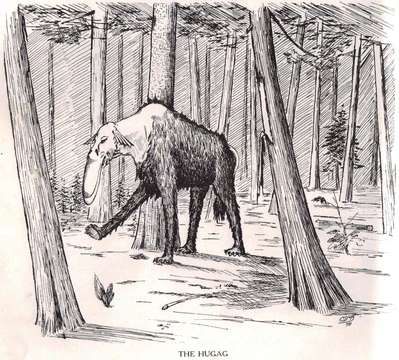
The squonk is a mythical creature reputed to live in the hemlock forests of northern Pennsylvania in the United States. First described in the 1910 book Fearsome Creatures of the Lumberwoods, it is known for its unhappy disposition and tendency to dissolve into tears when captured or frightened. The creature is celebrated at the Squonkapalooza event in Johnstown, Pennsylvania, held in August.
- first_written_account
- 1910
- field
- Folklore
- region
- Northern Pennsylvania, United States
- known_for
- Dissolving in tears when cornered
- species_taxonomy
- Lacrimacorpus dissolvens
Lore & Background
The squonk is described as having a retiring disposition, traveling at twilight and dusk. Its skin is misfitting and covered with warts and moles, causing it constant unhappiness. Hunters can track a squonk by its tear-stained trail, as the animal weeps continuously. When cornered or frightened, it may dissolve itself in tears. Later retellings added that squonks are slowest on moonlit nights to avoid seeing their reflection in illuminated water, and that they have webbed toes on their left feet.
Reader's Guide
The squonk holds a place in American lumber folklore, first appearing in early 20th-century books about fearsome creatures. Its taxonomy, Lacrimacorpus dissolvens, references its ability to dissolve when captured. The creature has been referenced in popular media, including songs by Steely Dan and Genesis, a monster in the Dungeon Crawler Carl series, and an episode of Abbott Elementary. In scientific literature, the term 'chemical squonk' describes substances that are stable in solution but decompose or polymerize when isolated, analogous to the squonk's dissolving act. The annual Squonkapalooza in Johnstown, Pennsylvania, celebrates the legend.
Did You Know?
- The squonk was first written about in the 1910 book Fearsome Creatures of the Lumberwoods.
- The squonk's species name Lacrimacorpus dissolvens combines Latin words for tear, body, and dissolve.
- Johnstown, Pennsylvania holds a celebration called Squonkapalooza in August.
- The term 'chemical squonk' is used for substances that decompose when isolated.
More in Fearsome critters 1-24
Spotted an error? Know more?
This is a living reference — every entry is fact-audited, and reader corrections feed straight into our audit queue. Suggest an edit · See this site's audit record